
Maa Bagalamukhi
"The 8th Mahavidya - The Goddess of Paralyzing Power"
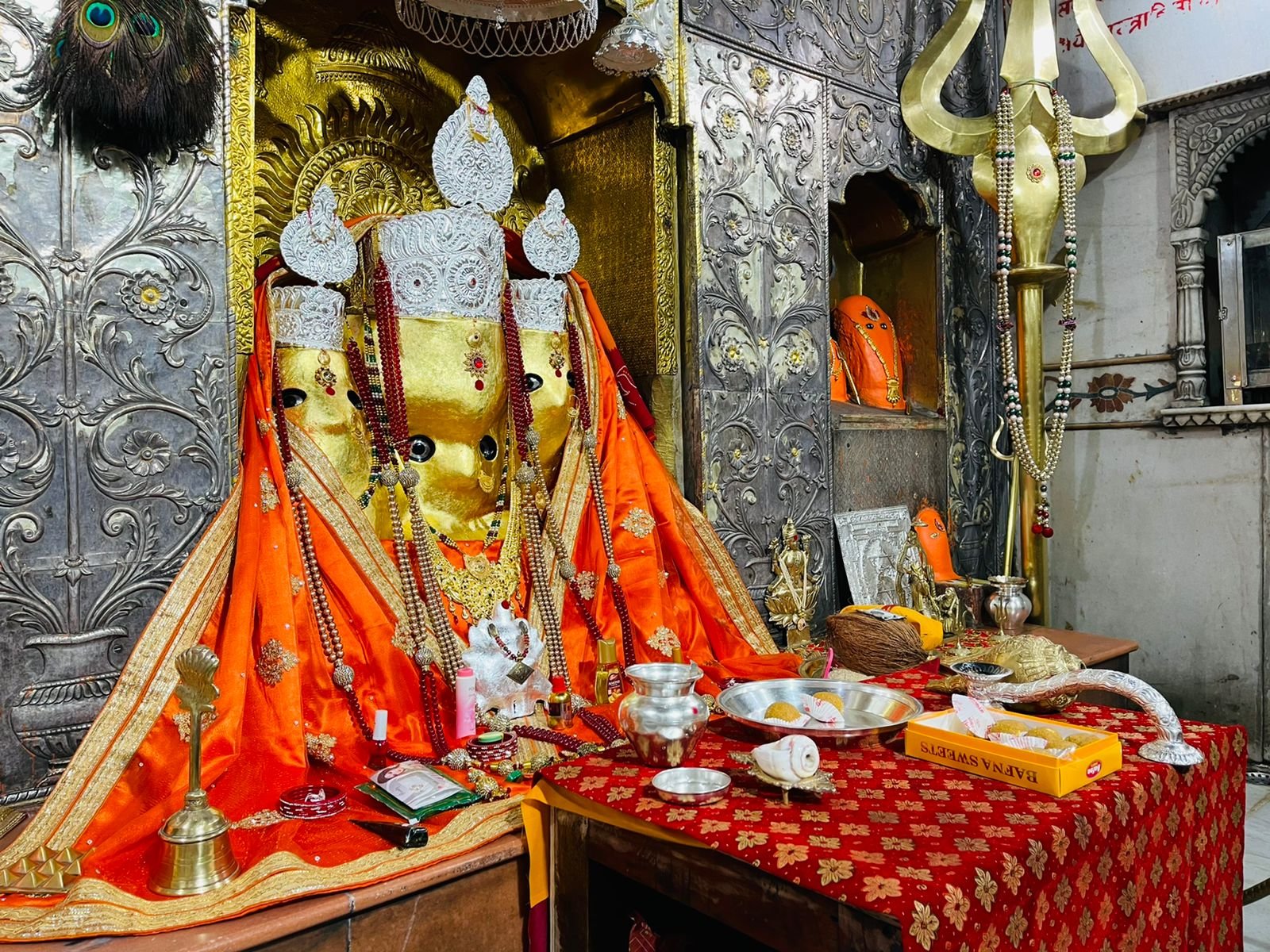
Baglamukhi Pradurbhav Katha (Divine Origin)
According to ancient Hindu scriptures, during the era of Satyuga, a powerful and destructive storm arose that threatened the balance of the entire universe. Chaos spread rapidly, disturbing all living beings and divine energies. Seeing this destruction, Lord Vishnu became concerned and sought guidance from Lord Shiva. In response, Lord Shiva advised him to invoke the supreme feminine force — Adi Shakti — to restore cosmic balance. Following this divine guidance, Lord Vishnu performed intense penance at a sacred place known as Haridra Sarovar in the Saurashtra region. Pleased with his devotion, Adi Shakti manifested from the golden waters of the lake in the form of Maa Baglamukhi. With her immense divine power, she immediately halted the destructive storm and restored peace. Because of this act, Maa Baglamukhi is revered as the Goddess of Stambhan Shakti — the power to stop, control, and neutralize negative forces.
Form and Symbolism of Maa Baglamukhi
Maa Baglamukhi is traditionally depicted wearing yellow garments, which symbolize power, energy, and spiritual authority. Due to this, she is also known as Pitambara Devi, meaning 'the one who wears yellow.' Her worship is especially associated with silencing enemies and opponents, victory in legal and political matters, control over speech and intellect, and removal of obstacles, suffering, and negativity.
Meaning of 'Baglamukhi'
बगलामुखी अर्थात बगलामुखमिव मुखं यस्याः सा।। The name 'Baglamukhi' signifies a divine force that has the power to control and immobilize. Just as a bridle controls a horse, Maa Baglamukhi represents the ability to restrain harmful speech, actions, and thoughts. She is the embodiment of Stambhan (paralysis or stillness) — a unique spiritual power that halts negativity at its root.
Spiritual Significance & Importance in Kalyug
In Tantric traditions, Maa Baglamukhi is recognized as the eighth Mahavidya among the ten Mahavidyas. She represents a powerful aspect of divine feminine energy that governs control, discipline, and protection. It is widely believed that in Kalyug, Maa Baglamukhi responds quickly to sincere devotion. With true faith and proper practice, she is said to silence enemies, remove obstacles, and fulfill the deepest desires of her devotees.
Benefits of Worshipping Maa Baglamukhi
Through her worship, devotees seek victory over enemies and opposition, control over speech and mind, success in legal, political, and personal conflicts, and spiritual discipline. Devotees believe that her blessings can bring success in court cases and disputes, spiritual and material growth, relief from serious illnesses, and absolute protection from negative energies and unseen forces.
Divine Mantras
Mool Mantra
॥ ॐ ह्लीं बगलामुखी सर्व दुष्टानां वाचं मुखं पदं स्तम्भय जिह्वां कीलय बुद्धिं विनाशय ह्लीं ॐ स्वाहा ॥
Dhyana Mantra
मध्ये सुधाब्धि मदीमण्डप रत्न वेद्यं सिंहांसेनापरिगतां परिपीतवर्णम्। पीताम्बराभरण माल्य विभषितांगदि देवी स्मारामि धृत मुद्गर वैरिजिवहमम्।।
Shatnaam Reference
लंकापति ध्वंसकरी लंकेशरिपु वंदिता। लंकानाथ कुल हरा महारावण हारिणी।।
Historical Timeline of Worship
400-600 CE: Major goddess-theology texts compiled into a puranic framework (e.g., Devi Mahatmya).
Medieval Period: Tantric encyclopedias and yogic-tantric strands expand the 'Ten-Form' (Mahavidya) goddess ritual systems across Northern and Eastern India.
1929-1930s: Major central-India pilgrimage complex institutionalized at Datia by Golokwasi Swamiji Maharaj.
2000s-Present: Growth of standardized ritual services, online darshan booking systems (Nalkheda), and highly visible district-level focus on dispute-resolution pilgrimages.
Major Pilgrimage Centers (Shakti Peeths)
Maa Bagalamukhi worship is anchored in several major North and Central Indian centers known for their profound Tantrokt sadhanas and historical significance:
Shri Peetambara Peeth, Datia (MP)
Institutionalized in 1929 by the ascetic Golokwasi Swamiji Maharaj after five years of tapasya. It features the sacred Haridra Sarovar, a Sanskrit library, and is a major center for Navratri anushthans.
Baglamukhi Mata Temple, Nalkheda (MP)
Situated on the banks of the Lakhundar river, local traditions associate this highly potent temple with the Pandava era. It is globally renowned for Shatru Nashak Havans to achieve victory in legal disputes.
Bagalamukhi Temple, Bankhandi (HP)
Located in the Kangra valley, this ancient temple is one of the most revered Shakti Peeths. It is believed to have been established by the Pandavas and remains a potent center for Tantric worship and spiritual protection.