
About the Temple
॥ ॐ ह्लीं बगलामुखी देव्यै नमः ॥
The Divine Origin of Maa Baglamukhi (Pradurbhav Katha)
Who is Maa Baglamukhi?
Maa Baglamukhi, also known as Pitambara Devi, is recognized as the eighth Mahavidya in the revered Dasha Mahavidya tradition. Though fierce in appearance, she is deeply compassionate toward her devotees. She grants protection, victory, clarity, and inner balance. Clothed in yellow and radiating a golden aura, her presence represents divine authority and spiritual stillness.
She is worshipped for:
- Victory over enemies and opposition
- Success in legal, political, and personal challenges
- Academic success and mental focus
- Control over speech, thoughts, and emotions
- Relief from illness and karmic burdens
- Protection from negative and unseen energies
- Opening pathways for prosperity and abundance
Meaning of “Baglamukhi”
The term “Baglamukhi” originates from the Sanskrit concept of control and restraint. Bagla (Valga) means reins or bridle, and Mukhi means face or expression. Together, it signifies “The Goddess who controls, restrains, and neutralizes harmful forces.” She is the divine power that stops negativity at its source.
Stambhan Shakti
Her Stambhan Shakti acts as a powerful shield—stopping harm before it manifests.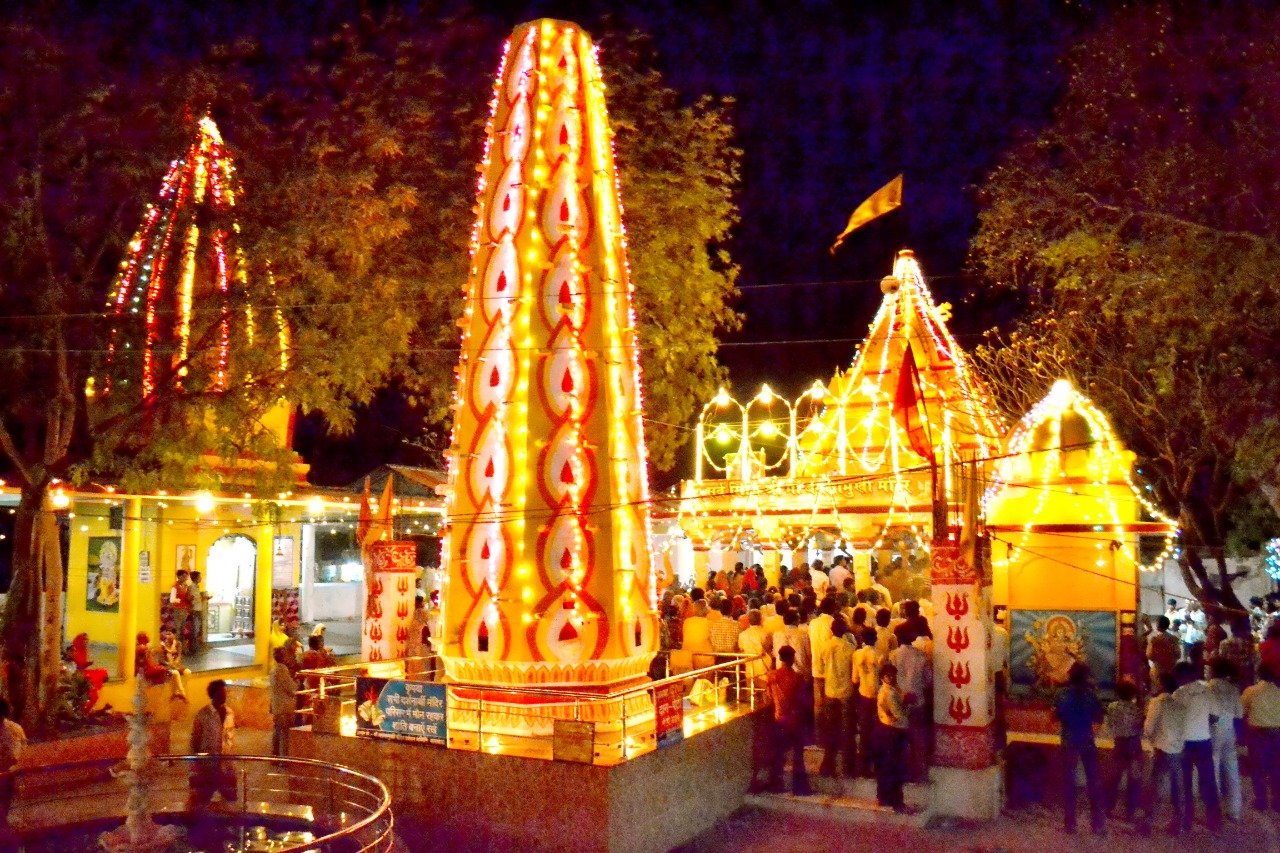
Nalkheda – The Sacred Siddh Peeth
Situated on the banks of the Lakhundar River in Madhya Pradesh, the Baglamukhi Temple in Nalkheda is considered one of the most powerful Siddh Peeths. It is believed to be a Swayambhu (self-manifested) seat of Maa, where her energy remains highly active. Ancient traditions suggest that during the Mahabharata period, the Pandavas performed penance here under the guidance of Lord Krishna before entering battle. Even today, devotees from across India visit this sacred place when all other paths seem closed.
The Spiritual Importance of Yellow (Peet)
Yellow holds deep significance in Maa Baglamukhi’s worship. It symbolizes clarity, wisdom, and divine energy.
Devotees offer:
These offerings represent purity, devotion, and alignment with her energy.
Maa Baglamukhi in Kalyug
In today’s world—filled with competition, stress, conflicts, and unseen challenges—Maa Baglamukhi is considered a divine anchor. People turn to her when facing court cases, emotional struggles, hidden enemies, or mental instability. Her blessings are believed to bring protection, clarity, and transformation.
Maa does not always give what we desire—she gives what truly serves our soul.
The Most Powerful Baglamukhi Mantra
॥ ॐ ह्लीं बगलामुखी सर्वदुष्टानां वाचं मुखं पदं स्तम्भय जिह्वां कीलय बुद्धिं विनाशय ह्लीं ॐ स्वाहा ॥
This sacred mantra is believed to:
- Silence negativity
- Protect against enemies
- Remove karmic obstacles
- Open the path to success and prosperity
The Beej Sound
Even chanting the Beej sound “ह्लीं (Hleem)” with faith is considered highly effective.
Temple Rules
- 1Maintain strict silence and decorum within the temple premises.
- 2Remove footwear only at designated areas.
- 3Photography inside the main sanctum is strictly prohibited.
- 4Please wear appropriate modest clothing. Wearing yellow is considered highly auspicious.
- 5Prasad is distributed only from the designated counters.
Chanting Guidance
There are no rigid rules—devotion matters more than numbers. Common practices include 36 times (considered sacred in this tradition), 51 or 108 times for deeper practice, or even once, with complete surrender. True power lies in intention, not repetition.
Mangala Aarti
6:00 AM
Evening Aarti
7:30 PM
Darshan Timings
6:00 AM to 9:30 PM
Havan & Puja Timings
In Navratri: All day (except during morning and evening Aarti).
Navratri & Festivals
Darshan: 6:00 AM to 11:00 PM during special festivals.